
10 Thought Leaders for Board Member Appointments in Uganda
The corporate governance landscape in Uganda is traversing a pivotal inflection point as organizations transition into the fiscal year. This evolution is characterized by a fundamental shift from traditional compliance-oriented oversight toward a strategic, “techno-ethical” paradigm.
In an environment increasingly defined by global market volatility, accelerated adoption of artificial intelligence (AI), and the institutionalization of Environmental, Social, and Governance (ESG) mandates, the requirements for board-level leadership have undergone a radical transformation.
Modern boards are no longer seeking directors solely based on tenure or industry pedigree; instead, there is a premium on leadership agility, digital fluency, and a demonstrated capacity to navigate complex, multi-stakeholder ecosystems.
As Uganda aims to achieve the objectives outlined in the Fourth National Development Plan (NDP IV) and the Digital Uganda Vision, the role of thought leadership in the boardroom has become a critical driver of national economic resilience.
The governance of major entities from financial institutions like Centenary Bank to national carriers like Uganda Airlines now requires a synthesis of human capital expertise and technological foresight.
This article identifies ten elite thought leaders whose professional trajectories, academic backgrounds, and governance insights position them as premier candidates for high-level board appointments and strategic consulting assignments in and beyond.
The Governance Frontier: Trends and Regulatory Shifts
The strategic deployment of digital infrastructure and the operationalization of ESG principles are no longer treated as separate silos within the Ugandan corporate environment.
Evidence suggests a direct correlation between board diversity and ESG performance, with diverse professional backgrounds and gender inclusivity linked to stronger sustainability commitments and higher-quality financial disclosure.
At the intersection of AI governance and “digital trust,” a top board trend has emerged, requiring directors to shift from passive oversight to active, metrics-driven engagement with emerging technologies.
Summary of Strategic Governance Trends
| Trend Pillar | Strategic Mechanism | Impact on Board Requirements |
| Agentic AI Oversight | Transition from predictive analytics to AI systems that carry out autonomous tasks. | Demand for “AI-aware” directors capable of establishing ethical governance around automated outcomes. |
| ESG & Decarbonization | Integration of environmental stewardship as a driver of competitiveness and investment attraction. | Mandatory reporting under IFRS S1 and S2 for public interest entities (PiEs). |
| Strategic Execution | Focusing on agility and response to sudden global shocks over static long-term planning. | Preference for leaders who can make decisive calls in ambiguous, data-conflicting environments. |
| Human Capital ROI | Treating Human Resources as a profit center through systemic culture oversight and L&D. | Requirement for directors with deep expertise in organizational design and leadership succession. |
| Techno-Ethical Governance | Balancing technological innovation with stakeholder interests and rights-based frameworks. | Demand for boards to include experts in data privacy, cybersecurity, and digital accountability. |
The regulatory environment in Uganda continues to mature, with the Companies Act 2012 providing the statutory foundation for director duties. However, supplementary regulations, such as the Companies Regulations 2023, have introduced more stringent processes for registration and de-registration, reflecting a move toward greater transparency and corporate accountability.
For instance, the transition to mandatory sustainability reporting, guided by the Institute of Certified Public Accountants of Uganda (ICPAU), indicates that by 2027, the baseline for “good governance” will include rigorous non-financial disclosures.
The Following are the Top 10 Corporate Profiles of Well Branded Individuals Suitable for Board Members in Uganda.
Profile 1: Robert Mwesige – The Polymath Consultant for the AI-Driven Era
Robert Mwesige is a recognized expert who provides valuable insights, serving as the “go-to” person for guidance and unique solutions to industry challenges, with majors in Artificial Intelligence (AI safety, OpenAI, Google, and New AI technologies and Agents) and Management & Leadership. He is recognized for shaping future-of-work trends, digital transformation, and sustainable business practices. He is highly influential in driving sustainable, positive business strategies, such as Future of Work & HR, with a focus on the evolving workplace. He also focuses on high-value sales and Digital marketing.
Robert Mwesige represents the emergence of the “polymath consultant” in Uganda, a professional who seamlessly integrates high-level business strategy with practical technical mastery in artificial intelligence and digital marketing. As the Senior Manager of HR & Business Services at Houston Executive Consulting (HEC), Mwesige has positioned himself as a leading authority on organizational architecture and the “AI-first” transition for enterprises.
Academic Foundation and Professional Designations
Mwesige’s suitability for board appointments is underpinned by a rigorous academic profile, including an Executive Master of Business Administration (EMBA) from the Quantic School of Business and Technology in Washington, DC, and an MBA in Marketing from Dr. D. Y. Patil Vidyapeeth in India. His professional designations are equally formidable; he is a Certified Management Consultant (CMC) and was awarded the Fellow Certified International Management Consultant (FCIMC) designation in February of 2026.
On 1st April 2025, he was admitted as a Full Member of the Chartered Institute of Management and Leadership (USA), further solidifying his standing within the global management fraternity. These credentials are complemented by a First-Class Honors Degree in International Development Studies from Kyambogo University (KYU), providing him with a nuanced understanding of the socio-economic drivers of the East African market.
Strategic Value and Boardroom Insight
Mwesige’s expertise is particularly relevant for boards grappling with the complexities of the digital economy. He specializes in technical SEO audits, semantic search optimization, and the commercial application of generative and predictive technologies. In his role at HEC, he has successfully executed high-value strategic assignments for major institutions, including the National Drug Authority and the National Social Security Fund (NSSF).
| Expertise Area | Board Application |
| AI Governance | Guiding enterprises through the adoption of ChatGPT, Gemini, and AI-driven data analytics for automated productivity. |
| Human Capital Strategy | Designing resilient organizational structures and competency-based recruitment frameworks. |
| Governance & Oversight | As a highly learned expert, Robert is a good fit for strategic direction, fiduciary oversight, and hiring top executives. He can ensure the entity acts in the best interests of stakeholders by focusing on governance, policy, and long-term success. |
| Environmental Stewardship | Integrating ESG principles into private-sector operations and advising on biodiversity protection. |
Mwesige’s approach to Human Resources, viewing it as a profit center rather than a cost center, has led to measurable productivity gains of up to 25% for his clients. His prolific thought leadership, comprising over 100 marketing videos and hundreds of insightful articles on HR and business management, positions him as a high-authority voice for boards in the technology, manufacturing, and professional services sectors.
Profile 2: Sylvia Mulinge – The Transformative Architect of Digital Inclusion
Sylvia Mulinge, the Chief Executive Officer and Executive Director of MTN Uganda, is one of the most compelling corporate leaders in East Africa. Her leadership is defined by a commitment to leveraging technology for social and economic transformation, a philosophy she describes as “living for an Audience of One”.
Career Trajectory and Commercial Impact
Mulinge’s 22-year career in telecommunications and fast-moving consumer goods (FMCG) is marked by extraordinary commercial execution. Before joining MTN in October 2022, she served as the Chief Consumer Business Officer at Safaricom PLC in Kenya, where she was instrumental in increasing brand equity and achieving an 86% increase in market share. Under her leadership, MTN Uganda has accelerated its digital revolution, committing over UGX 2 trillion in infrastructure investment to expand 4G coverage and financial inclusion.
Her academic pedigree includes a Bachelor of Science in Food Science and Technology from the University of Nairobi, where she graduated with First-Class Honors. She is also a certified executive coach and mentor, focusing on partnership, humility, and professionalism as the core tenets of her leadership philosophy.
Governance Roles and Global Influence
Mulinge’s influence extends far beyond the telecommunications sector. She represents Africa on the Meta EMEA Client Council and chairs the boards of MTN Mobile Money Uganda and the Maasai Mara Wildlife Conservancies Association.
| Board Competency | Proven Impact |
| Strategic Digitalization | Positioning telecom operators as architects of a future defined by smart infrastructure and fintech innovation. |
| ESG & Conservation | Leading large-scale wildlife conservancy efforts and advocating for sustainable development programs. |
| Ethics & Trust | Championing digital safety through initiatives like the Beera Steady Campaign to combat digital fraud. |
| Inclusive Leadership | Driving the adoption of locally inspired digital solutions that reach the “last mile” of society. |
Mulinge’s recognition as the Best CEO across the entire MTN Group in 2024 and her inclusion in the list of the 100 Most Influential African Women reflect her status as a high-impact board candidate. She is uniquely suited for directorships in financial services, conservation, and any organization seeking to align digital innovation with profound societal impact.
Profile 3: Amos Wekesa – The Visionary of Sustainable Growth and Brand Uganda
Amos Masaba Wekesa is a titan of the Ugandan tourism industry and a powerful advocate for indigenous-led economic development. As the founder and Managing Director of Great Lakes Safaris and The Great Lakes Collection, Wekesa has demonstrated that sustainable entrepreneurship can be a primary engine of national growth.
Entrepreneurial Resilience and Global Recognition
Wekesa’s journey from a humble background in Eastern Uganda to becoming a continental icon is a testament to his resilience and strategic foresight. His businesses, which employ over 250 people and gross an estimated US$8 million annually, are models of eco-tourism that emphasize conservation and community involvement.
In March, Wekesa was awarded the prestigious African Cultural & Eco-Tourism Award at the African Heritage Awards in Ghana, recognizing his outstanding leadership in cultural preservation and sustainable tourism. He is a frequent keynote speaker at international forums, including the United Nations General Assembly, where he addresses topics ranging from economic investment to youth development.
Governance Experience and Strategic Advocacy
Wekesa has held numerous high-level board positions, including President of the Uganda Tourism Association and member of the Uganda Tourism Board. He currently chairs the Presidential Investment Round Table Tourism Technical Working Group.
| Governance Attribute | Impact Strategy |
| Sustainable Eco-Tourism | Championing authentic safari experiences that prioritize wildlife conservation and community benefit. |
| National Branding | Acting as a “self-appointed” but highly effective ambassador for Uganda’s investment potential. |
| Regional Expansion | Scaling operations across borders, including the launch of Mwamba Lodge in Tanzania. |
| Macroeconomic Insight | Advocating for smart tourism strategies to replace foreign aid with sustainable tourist revenue. |
Wekesa’s expertise in marketing, hospitality, and social enterprise makes him an ideal board member for organizations looking to strengthen their brand equity and social impact. His ability to build “meaningful connections between travelers and the heart of the wild” suggests a sophisticated understanding of consumer behavior in the economy.
Profile 4: Dr. Peter Kimbowa – The Futurist Catalyst of Leadership
Dr. Peter Kimbowa, popularly known as “PK,” is a global leadership catalyst, executive coach, and futurist whose career has shaped the standards of corporate governance in Uganda. As the former Chairperson of the National Social Security Fund (NSSF), he led the Fund through a period of strategic realignment and governance reform.
Institutional Transformation and Coaching Excellence
Kimbowa is the Managing Partner of IFE Consultants and the founder of the CEO Summit Uganda and the League of East African Directors (LEAD). He is an internationally certified trainer by the World Trade Organization and the International Finance Corporation, having trained over 50,000 people across fifteen countries.
In 2020, he was named one of the “101 Most Fabulous Global Coaching Leaders” by the World HRD Congress, a testament to his expertise in leadership development and talent nurturing. Through the CEO Apprenticeship Program (CAP), he has mentored over 150 graduates, more than half of whom have risen to executive or CEO roles.
Board Portfolio and Governance Advisory
Kimbowa’s board experience is exceptionally broad, spanning the financial, energy, and medical sectors. He has served on the boards of Equity Bank Uganda Limited, Eskom Uganda, Baylor College of Medicine, and the Kampala Archdiocese Land Board.
| Board Role | Contribution to Governance |
| Governance Catalyst | Implementing rigorous, risk-oriented structures and independent oversight in major institutions. |
| Strategic Planning | Guiding boards through organizational restructuring and the development of integrated sustainability projects. |
| Transformation Lead | Leading transformational work focused on “learning from the future” to anticipate disruptive shifts. |
| Audit & HR Oversight | Chaired the Human Resource Committee at Eskom and served on various investment committees. |
Kimbowa’s PhD from the Commonwealth University and his MBA in Strategy from Maastricht/ESAMI provide him with a world-class theoretical foundation to address complex governance challenges. He is a premier candidate for boards requiring a “Global Leadership Catalyst” capable of bridging the gap between current performance and future readiness.
Profile 5: Patrick Bitature – The Resilient Architect of Multi-Sector Conglomerates
Patrick Bitature is one of Uganda’s most successful entrepreneurs and a defining figure in the East African business ecosystem. As the founder and Group CEO of the Simba Group of Companies, Bitature has built a conglomerate that touches telecommunications, hospitality, energy, real estate, and healthcare.
Business Innovation and Economic Contribution
Bitature’s career began amid immense personal tragedy, as he became his family’s breadwinner at age 13. Since founding Simba Telecom in 1998, he has grown the business into the largest airtime retail chain in East Africa. His hospitality assets, including Protea Hotel Kampala Skyz, have earned him the title of “Entrepreneur of the Year” at the African Tourism Leadership Forum in 2022.
He holds a degree from the London School of Accountancy and is a Fellow of the Institute of Chartered Secretaries and Administrators. He has also been awarded an honorary doctorate in humanities from United Graduate College and Seminary International.
Governance and Philanthropic Leadership
Bitature has a deep history of public service and board leadership. He has chaired the Private Sector Foundation Uganda (PSFU) and the Uganda Investment Authority (UIA), and currently chairs the board of Umeme Limited, Uganda’s primary electricity distributor.
| Governance Pillar | Strategic Impact |
| Sustainability & ESG | Transitioning business priorities from “profit first” to “People, Planet, and Profit”. |
| Systemic Reform | Shaping national systems in energy connectivity and hospitality through high-level lobbying and advocacy. |
| Youth Skilling | Equipping 500,000 Ugandan youth with financial literacy and entrepreneurship skills through the “500k Project”. |
| Institutional Stewardship | Chaired the Presidential Investment Round Table and serves on the Harvard Kennedy School Dean’s Council. |
Bitature’s emphasis on “building a brand that takes time” and his commitment to resilience and purpose make him a high-authority candidate for boards overseeing complex portfolios. His presence on a board provides a unique blend of entrepreneurial agility and institutional weight.
Profile 6: Allen Kagina – The Catalyst of Institutional Transformation
Allen Catherine Kagina is a distinguished public sector leader whose name is synonymous with institutional reform and operational excellence in Uganda. Over her 20-year career, she has transformed some of the nation’s most vital institutions, including the Uganda Revenue Authority (URA) and the Uganda National Roads Authority (UNRA).
A Legacy of Integrity and Results
As Commissioner General of the URA from 2004 to 2014, Kagina led a groundbreaking turnaround that significantly improved revenue collection and established the tax body as a model public institution for developing countries. She was awarded the Corporate Leadership Award in 2006 for these achievements.
In 2015, she was appointed Executive Director of the UNRA, where she spearheaded reforms that enhanced transparency and efficiency in the nation’s road infrastructure projects. She holds a Master of Public Administration from the University of Liverpool and a Master of Arts in Organizational Leadership from Uganda Christian University.
Board Suitability and Mentorship
Kagina is a passionate advocate for corporate transformation and the development of high-performing teams. Her leadership is rooted in fostering a culture of integrity and mentoring the next generation of leaders.
| Leadership Area | Governance Value |
| Operational Excellence | Proven ability to streamline complex bureaucracies and deliver measurable financial performance. |
| Compliance & Oversight | Expert in taking on systemic corruption and increasing service-orientation in public service. |
| Crisis Resilience | Leading organizations through unprecedented times, such as the height of the COVID-19 pandemic. |
| Governance Reform | Spearing transparency initiatives and aligning institutional goals with national development plans. |
Kagina’s recent role as Chairperson of the Technical and Vocational Education and Training (TVET) Council further expands her expertise in human capital development and skilling—a critical priority for Uganda. She is a premier choice for boards in the banking, logistics, and manufacturing sectors.
Profile 7: Dr. Joseph Muvawala – The Architect of National Economic Strategy
Dr. Joseph Muvawala is a high-level economist and public servant whose influence over Uganda’s long-term developmental trajectory is profound. As the Executive Director of the National Planning Authority (NPA), he is the primary architect of the nation’s integrated development plans and the Vision 2040 framework.
Macroeconomic Expertise and Policy Design
Muvawala holds a PhD in Economics and a Master of Arts in Economic Policy and Planning from Makerere University, complemented by a certificate in Public Sector Budget Management from Harvard University. His career spans roles in the African Development Bank and ministries of transport, education, and local government.
At the NPA, he manages complex deliverables across every sector of the Ugandan economy, from sustainable financial development to the evaluation of government programs such as Universal Primary Education (UPE).
Traditional Leadership and Governance
In addition to his technocratic roles, Muvawala serves as the Prime Minister (Katukiro) of the Busoga Kingdom, a position that allows him to integrate traditional values with modern development strategies. He has served on the boards of the Uganda National Roads Authority (UNRA) and the Directorate of Industrial Training.
| Strategic Insight | Boardroom Application |
| Macro-Fiscal Planning | Aligning corporate strategies with national priorities and global economic trends. |
| Evidence-Based Policy | Expertise in evaluation theories, practices, and data laws to support informed decision-making. |
| Human Capital Planning | Addressing the “skills mismatch” and workforce transitions in a rapidly changing labor market. |
| Regional Integration | Navigating the economic complexities of the African Great Lakes region and South Sudan. |
Muvawala’s deep understanding of Uganda’s socio-economic fabric and his ability to coordinate multi-sectoral strategies make him a high-authority candidate for boards in the energy, infrastructure, and financial sectors. He provides the “foresight” and “oversight” necessary for long-term institutional stability.
Profile 8: Jacqueline Asiimwe – The Visionary of Ethical Philanthropy and Social Justice
Jacqueline Asiimwe is a distinguished lawyer, feminist, and philanthropy advisor who has become one of East Africa’s most compelling voices on leadership and social justice. As the founder and CEO of CivSource Africa, she is at the forefront of refining philanthropic practices across the continent.
Legal Pedigree and Social Advocacy
Asiimwe is a Ugandan and USA-trained lawyer, holding a Master of Laws from Georgetown University and a Bachelor of Laws from Makerere University. Her career of over 30 years includes leadership positions in civil society, government, and donor agencies. She is known for her zealous fight for women’s rights and her participation in campaigns to combat corruption, including the “Black Monday” initiative.
Governance and Narrative Transformation
Through CivSource Africa, Asiimwe works to reshape the narrative of philanthropy in Africa by redefining giving and generosity through storytelling and advocacy. She serves as the Chairperson of the East African Philanthropy Network (EAPN) and chairs the board of the International Center for Research on Women (ICRW) Uganda.
| Leadership Insight | Strategic Board Value |
| Techno-Ethical Governance | Leading discussions on the ethical use of AI for corporate accountability and desk research. |
| Empathetic Leadership | Advocating for empathy and mental health awareness as core components of modern leadership. |
| Stakeholder Stewardship | Connecting traditional philanthropy with African feminist movements to empower women at the margins. |
| Compliance & Policy | Expertise in human rights law, policy analysis, and democratic governance reforms. |
Asiimwe’s ability to “lead with compassion, empathy, and integrity” makes her an invaluable asset for boards seeking to deepen their ESG commitments and foster authentic human connection within their organizations. She is an ideal director for NGOs, legal entities, and social enterprises.
Profile 9: Joan Mugenzi – The Master Architect of Leadership Transition
Joan Mugenzi is a world-class professional coach and leadership trainer, holding the prestigious Master Certified Coach (MCC) credential from the International Coaching Federation. She is one of only three MCC-credentialed coaches in East and Central Africa and the only one in Uganda.
Coaching Mastery and Global Experience
Mugenzi has over 2,500 hours of professional coaching experience, with a specialized focus on “employment transition,” executive coaching, and leadership development. She is the founder of Imagine Me Africa and the Founding President of the ICF Uganda Chapter. Her career includes nearly two decades at World Vision International, where she supported health systems strengthening across more than 25 countries.
Board Succession and Agility
Mugenzi’s expertise is vital for boards navigating the complexities of the workforce. She specializes in helping newly appointed executives become effective in their roles and supporting organizations through major cultural and structural changes.
| Expertise Area | Boardroom Benefit |
| Succession Planning | Facilitating smooth transitions for CEOs and ensuring robust, values-aligned leadership pipelines. |
| Team Performance | Revitalizing board and executive team energy to achieve measurable improvements in profit and efficiency. |
| Leadership Agility | Equipping directors with the problem-solving and critical thinking skills required for permanent uncertainty. |
| Health of the Mind | Holding a Master’s in Public Health Leadership, she focuses on the psychological well-being of the leadership team. |
Mugenzi’s track record—including helping a Stanbic Bank team realize new energy levels and co-facilitating a doubling of profits for a Unilever team—positions her as a high-authority consultant for boards seeking to optimize their most critical asset: their people.
Profile 10: Daniel Kalinaki – The Information Guardian and Media Strategist
Daniel Kalinaki is a veteran journalist and media icon whose career at the Nation Media Group (NMG) has defined the standards of investigative journalism and editorial governance in Uganda. Recently retired, Kalinaki has spent 25 years shaping public discourse and mentoring the region’s top media professionals.
Media Governance and Public Trust
Kalinaki holds a Master of Arts in International Journalism from City, University of London, and a Bachelor of Arts in Mass Communication from Makerere University. As the former General Manager for Editorial Operations in Uganda, he has navigated the complexities of media law, government relations, and the preservation of public interest.
Strategic Influence for Boards
Kalinaki chairs the Uganda Editors’ Guild and serves as the President of the Eastern Africa Editors Society. He is a sought-after authority on access to information, data privacy, and digital rights.
| Governance Quality | Board Contribution |
| Transparency & Ethics | Upholding the highest standards of integrity and accountability in public-facing organizations. |
| Risk Management | Navigating legal battles and regulatory pressures while maintaining institutional independence. |
| Digital Convergence | Managing regional projects and editorial convergence in a fast-evolving ICT landscape. |
| Mentorship & Legacy | Building and sustaining high-authority intellectual capital through structured mentorship. |
Kalinaki is an ideal board candidate for organizations in the media, ICT, and non-profit sectors. His ability to “irritate the powers-that-be” through principled columns translates in the boardroom to a director who is not afraid to challenge consensus to protect the long-term good of the company.
Strategic Board Appointments
Building an effective board of directors requires a deliberate balance of strategic foresight, specialized expertise, and a high degree of mutual trust. Rather than simply filling seats, organizations should treat board appointments as a strategic lever to enhance oversight, mitigate risk, and drive long-term value. Success hinges on assembling a diverse cohort—ranging from industry veterans to functional specialists—who can provide the objective analysis necessary for robust governance and navigating complex global challenges.
How to Determine Who to Appoint for Board Members
To ensure a well-rounded board, candidates should be selected based on their ability to fill specific “archetypes” of value that contribute to the collective intelligence of the group:
1. Industry Visionaries
These are leaders with deep domain expertise who possess a profound understanding of market shifts and emerging trends. They serve as a sounding board for the CEO and help the organization maintain long-term resilience against industry disruption.
2. Functional Specialists
These professionals demonstrate specialized expertise in critical areas such as corporate law, high finance, digital transformation, and cybersecurity. Their presence ensures that the board can provide informed oversight on technical matters that might otherwise be overlooked.
3. Independent Directors
As external voices with no prior ties to the organization or founding family, these directors are essential for providing unbiased oversight. They play a critical role in protecting shareholder interests and ensuring high standards of accountability and transparency.
4. Diversity Champions
These professionals bring varied lived experiences and cognitive diversity to the table. By incorporating a range of perspectives, the board can more effectively avoid groupthink, leading to more creative problem-solving and alignment with modern regulatory and ESG expectations.
5. Trusted Advisors
Established members of professional networks or former consultants who possess a deep understanding of the company’s culture and long-term vision. These individuals often act as a bridge between the board’s strategic goals and the company’s historical identity.
Critical Considerations for Board Selection
Selecting the right individual is only half the battle; the composition must function as a cohesive unit where the whole is greater than the sum of its parts.
1. Compositional Collaboration
Organizations should move beyond “friendship-based” hiring and instead focus on a “skills matrix” approach. This ensures a complementary mix of financial, strategic, and compliance-oriented skills that directly address the company’s specific growth stage and future hurdles.
2. Operational Capacity
It is vital to evaluate whether a nominee has the actual “bandwidth” to engage deeply with the organization. Effective oversight requires significant time and mental energy, and “overboarded” directors may lack the capacity to respond effectively during crises or when scaling rapidly.
3. Cultural and Ethical Due Diligence
Rigorous background checks are mandatory to ensure candidates align with the company’s core values. In an era of heightened transparency, a single director’s reputational or ethical lapses can directly and adversely affect the brand’s public standing and investor confidence.
4. Structured Selection Process
Appointments should be managed through a formal, transparent process led by a Nominating Committee or the board chair. This includes formalizing candidate profiles, conducting multi-stage interviews, and securing final shareholder ratification to ensure legitimacy and institutional buy-in.
While private companies often rely on the discretion of founders and majority shareholders, public entities must navigate a much more stringent landscape of independence requirements, disclosure mandates, and board diversity regulations.
The Leadership Paradigm
The collective profiles of these ten thought leaders highlight a critical shift in the Ugandan boardroom. In the traditional markers of success, years of experience and linear career progression are no longer sufficient indicators of board readiness. Instead, the market demands “agility over tenure,” a trend driven by the relentless pace of technological change and market volatility.
The Evolution of Board Capability in Uganda
| Leadership Attribute | 2020-2023 Focus | Strategic Imperative |
| Technological Role | Passive oversight of IT departments. | Active AI governance and ethical “digital trust” management. |
| ESG Maturity | Symbolic compliance and philanthropy. | Measurable sustainability impact and IFRS S1/S2 reporting. |
| Performance Metric | Financial profit and quarterly growth. | “People, Planet, Profit” and cultural health oversight. |
| Decision-Making | Relying on historical data and precedents. | Comfort operating in ambiguity and with “incomplete” AI-driven data. |
| Stakeholder Model | Shareholder-centric decision-making. | Comprehensive stakeholder participation and “rights-based” governance. |
Institutional Leadership Case Study: The Centenary Bank Reset
The leadership transition at Centenary Bank serves as a benchmark for governance in. The bank has recently adopted a “dual-Executive Director” model to separate growth-facing divisions from operational execution. This shift, driven by the board, reflects a recognition that “scale demands structure”.
As Fabian Kasi transitions to the role of Group CEO at Centenary Group, and Godfrey Byekwaso assumes the Managing Director role at Centenary Bank Uganda, the focus has shifted toward a clearer, more functional allocation of responsibilities. This coordinates with the regulatory driver for financial holding companies, ensuring that the Managing Director directly supervises core governance and control functions.
Synthesis & Building a Future-Ready Board
The ultimate objective of corporate governance is to create a “techno-ethical” ecosystem that empowers humanity while safeguarding institutional resilience. Board directors must demonstrate the four “sight” capabilities: oversight, hindsight, foresight, and insight. The ten individuals profiled in this article, Robert Mwesige, Sylvia Mulinge, Amos Wekesa, Peter Kimbowa, Patrick Bitature, Allen Kagina, Joseph Muvawala, Jacqueline Asiimwe, Joan Mugenzi, and Daniel Kalinaki, collectively embody these capabilities.
They are the “Generals” made in the battlefield of African enterprise, capable of leading organizations through the edges of discomfort and toward sustainable prosperity. For organizations seeking high-impact leadership, these thought leaders offer a proven track record of institutional turnaround, digital mastery, and ethical stewardship that is globally admired and locally inspired.
More Knowledge and Insight Articles
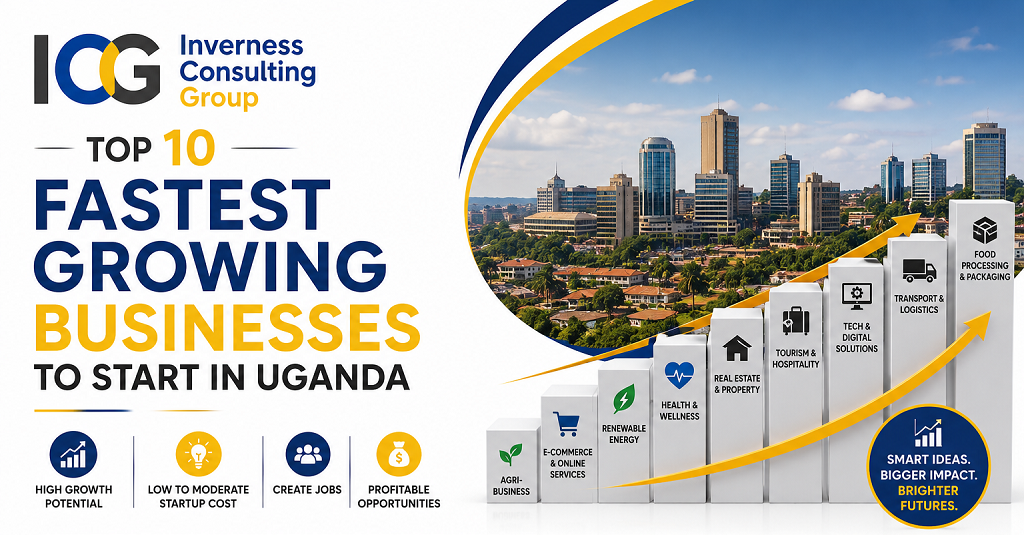
Uganda’s fastest-growing business sectors span across digital finance, agro-processing, and real estate. Driven by a young population and a booming tech scene, Fintech (like mobile money and lending apps) leads scaling opportunities. For small enterprises, street food vending (chapati, rolex) and agro-processing (cassava flour, groundnut paste) offer the highest daily demand.

An HR (Human Resources) manual is an internal document that outlines an organization’s workforce policies, standard procedures, and employee expectations. It ensures fair treatment, legal compliance, and consistent daily operations across the company. Typically, the HR manual includes guidelines on recruitment, onboarding, employee code of conduct, compensation, benefits, leave entitlements, performance evaluation, disciplinary procedures, and termination protocols.
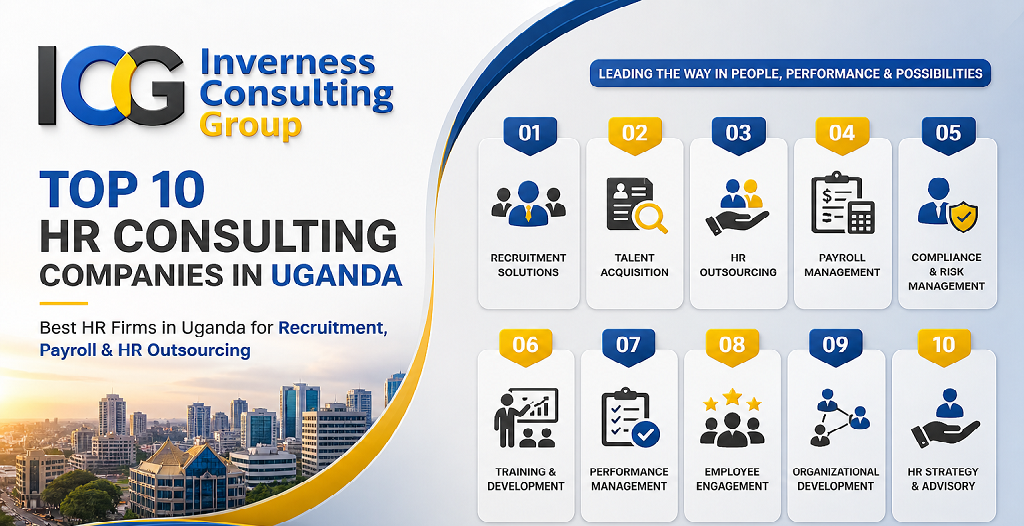
The top HR consulting companies in Uganda for 2026 provide complete workforce solutions for growing businesses. The best HR firms in Uganda specialize in expert HR services, executive recruitment, seamless payroll management, strategic HR outsourcing, strict regulatory compliance, and comprehensive talent management.
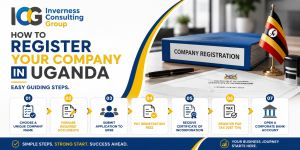
Master the new URSB e-Registry portal, local incorporation, foreign company setup, and URA TIN registration. Start a business fast with our 2026 URSB e-Registry company registration Uganda guide. Covers local incorporation, foreign registration company set up.
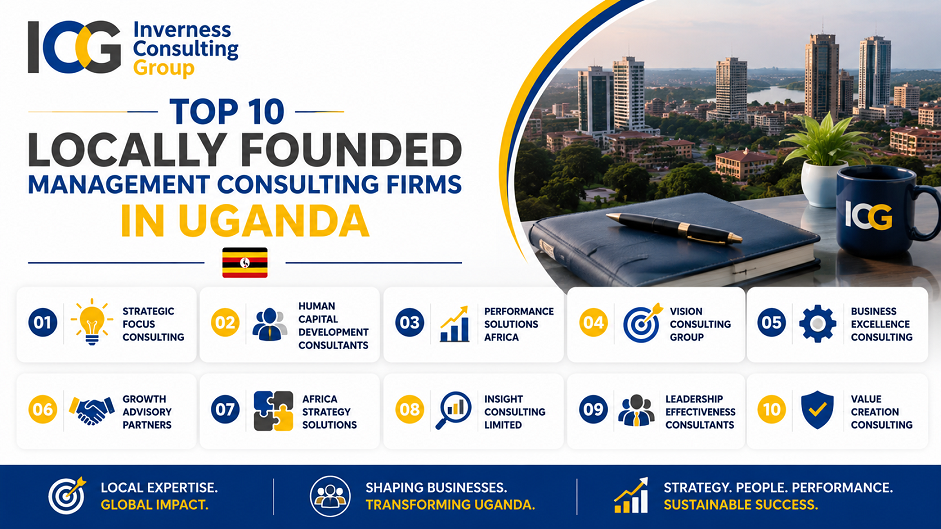
Top Management Consulting Firms in Uganda: Discover the 10 best locally founded business consulting companies in Kampala for strategic planning, HR advisory, operational improvements, and business growth to transform your corporate enterprise.
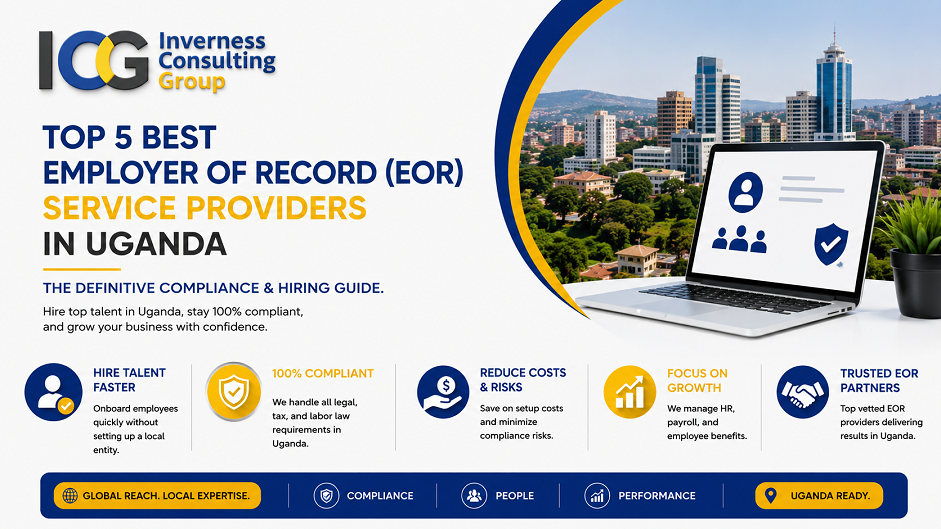
Compare the top 5 Employer of Record (EOR) providers in Uganda. Learn about URA taxes, NSSF, labor laws, and how to hire remote workers compliantly. Get the Leading third-party organization that legally hires and employs workers on your behalf.

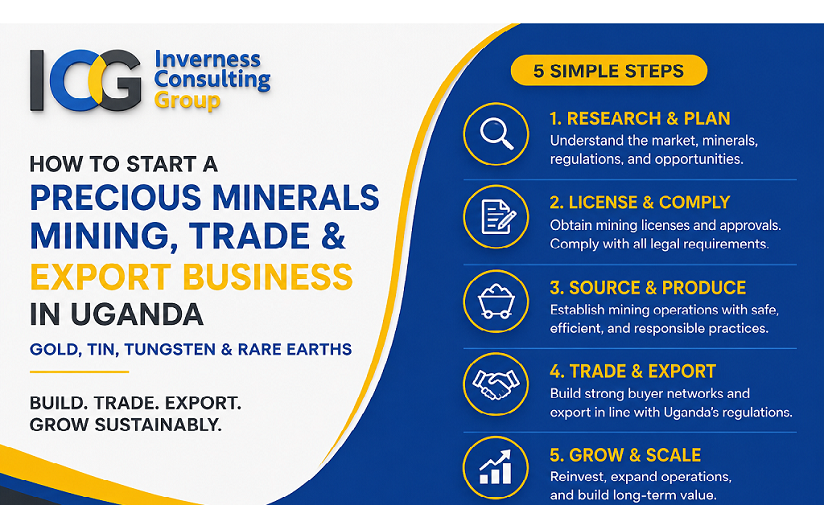
How to Start a Precious Minerals Mining, Trade & Export Business in Uganda (Gold, Tin, Tungsten & Rare Earths). Discover how to legally and profitably enter Uganda’s precious minerals industry. Learn the step-by-step process for mining, trading, and exporting gold, tin, tungsten, tantalum, and rare earths under the Mining and Minerals Act, 2022.

Discover the 10 top strategic planning consultants in Uganda. Expert guide to business strategy, NDP III alignment, corporate advisory, and organizational development in Kampala.
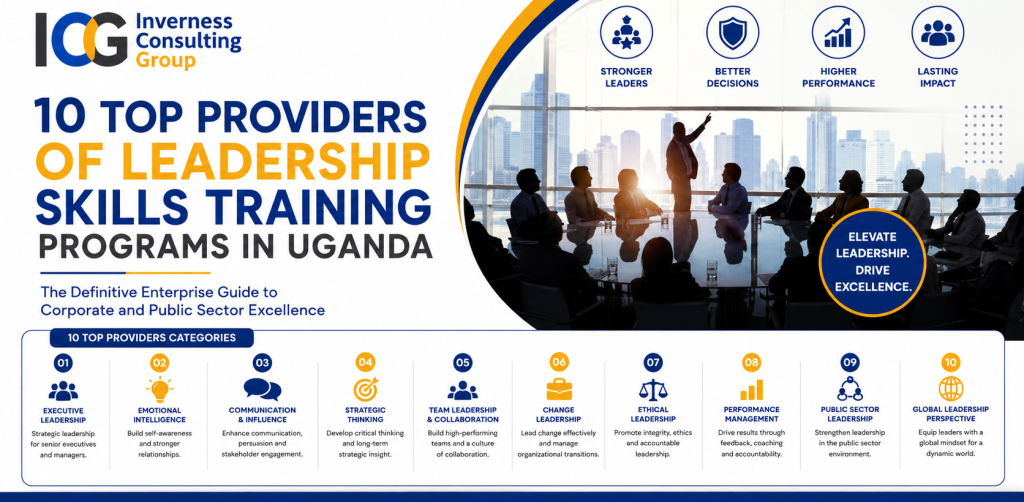
To successfully navigate this landscape, human resource directors, chief executives, and institutional development partners require an analytical, fact-based map of the training ecosystem. This guide profiles the top 10 providers of professional leadership development in Uganda, Africa, serving as an indispensable buyer’s guide for enterprise-level human resource development.
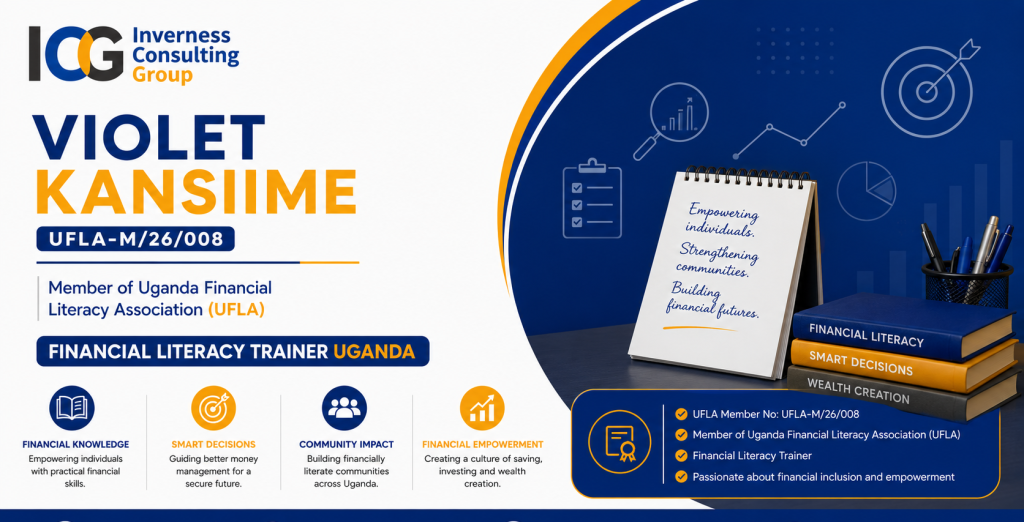
Violet Kansiime (UFLA-M/26/008) becomes a member of the Uganda Financial Literacy Association (UFLA) in February 2026. A leading financial literacy trainer in Uganda delivering expert training in personal financial management, savings, investment, insurance, debt management, retirement planning, digital financial literacy, and supervised financial institutions for youth, women, civil servants, SACCOs, farmers, families, and the informal sector.
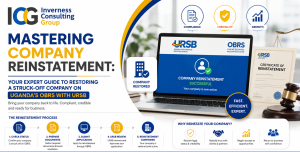
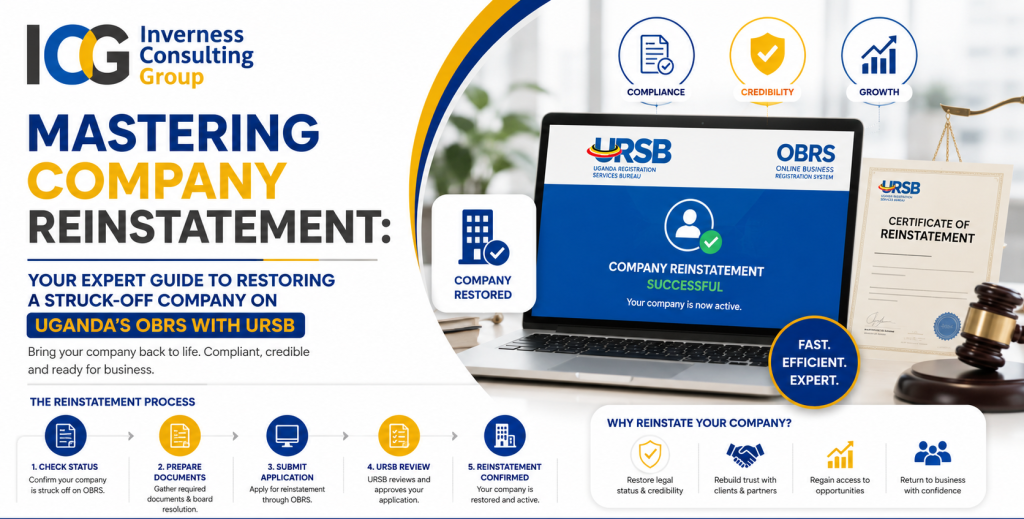
Is Your Company Struck Off the URSB Register in Uganda? Discover Inverness Consulting Group’s Expert 8-Step Guide to Reinstate Your Business Via the OBRS Portal Seamlessly. Learn Critical Compliance, Avoid Penalties, And Ensure Your Company’s Legal Future.
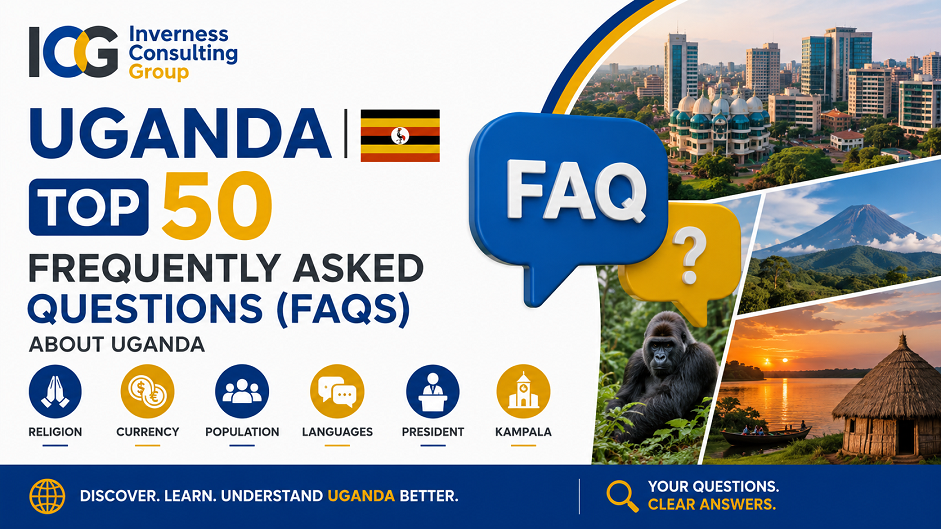
Uganda is a beautiful country in East Africa ( The Pearl of Africa) whose diverse landscape encompasses the snow-capped Rwenzori Mountains and immense Lake Victoria. Its abundant wildlife includes chimpanzees and rare birds. Remote Bwindi Impenetrable National Park is a renowned mountain gorilla sanctuary. Murchison Falls National Park in the northwest is known for its 43 m-tall waterfall and wildlife, including hippos.

Uganda’s Occupational Safety and Health (Amendment) Act 2025 significantly expands employer responsibilities to all workplaces, regardless of size. It mandates annual health and safety audits, comprehensive medical surveillance, employee wellness programs (including mental health support), and certified operator training.



how can we help you?
Contact us at the Consulting WP office nearest to you or submit a business inquiry online.
“Navigating Kenya’s complex tax environment was a major headache—until we engaged Inverness Consulting. Their expert advisory not only helped us save millions in potential penalties but also optimized our tax planning in ways we hadn’t imagined. Their accuracy, timely submissions, and clarity in communication set them apart from any firm we’ve worked with before.”